
Best Gingelly Seeds
Gingelly is one of the most important oilseed crops in India, valued for its high oil content, nutritional benefits, and economic significance. At Desikheti, we bring you premium-quality Gingelly seeds.
We offer a wide collection of Gingelly seed varieties from trusted brands. Explore our Gingelly seed collection below, place your order online, and get the seeds delivered directly to your location.
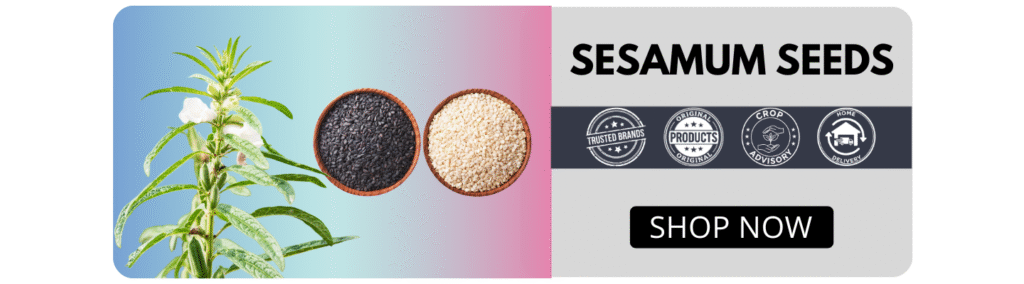
Gingelly (Sesamum indicum) is one of the oldest and most important oilseed crops cultivated worldwide. It belongs to the Pedaliaceae family and is known for its high oil content, nutty flavor, and nutritional value.
Role of Gingelly in Indian Cuisine
In India, Gingelly seeds are widely used in cooking, sweets, and snacks. They are a key ingredient in traditional sweets like tilgul, laddoo, chikki, and halwa, adding a nutty flavor and crunch. Gingelly seeds are also used in savory dishes, curries, and pickles, as well as in roasted or raw form as a garnish for breads and snacks. Apart from culinary uses, Gingelly seeds are processed for oil extraction, which is commonly used for cooking, massage, and traditional medicinal purposes across the country.
Role of Gingelly in Global Cuisine
Globally, Gingelly seeds are valued for their oil, flavor, and nutritional benefits. They are widely used in Asian, Middle Eastern, and Mediterranean cuisines in dishes like tahini, hummus, sushi, salads, and baked goods. Gingelly oil is a popular cooking ingredient in China, Japan, and Korea, while roasted seeds are used as toppings on breads, pastries, and snacks worldwide.
Non-Culinary Uses of Gingelly
Beyond food consumption, Gingelly has several non-culinary applications. Gingelly oil is widely used in cosmetics, skincare, and hair care products for its moisturizing and nourishing properties. It is also utilized in traditional medicine for massage, improving circulation, and promoting overall wellness.
Gingelly Farming
Gingelly is a highly valued crop due to its consistent demand for oil, culinary uses, and health benefits. Its ability to grow in diverse climatic conditions and its relatively short growing period make it suitable for multiple cropping cycles in a year.
Why Gingelly farming?
- Continuous demand in domestic and international markets for seeds and oil
- Good returns even from small landholdings
However, before starting Gingelly farming, it is important to choose the right Gingelly variety based on factors like climate suitability, soil type, yield potential, market demand, and farming purpose. Selecting quality Gingelly seeds and following proper cultivation practices ensure healthy plants, high yield, and better profits.
Popular Gingelly Types in India
- White Gingelly
White Gingelly (Sesamum indicum), originally cultivated in India, is the most commonly grown Gingelly variety. Its small, oval-shaped seeds have a mild nutty flavor and are highly valued for oil extraction as well as culinary purposes. White Gingelly is widely used in traditional Indian sweets like tilgul and laddoos, as well as in snacks and baking.
- Black Gingelly
Black Gingelly (Sesamum indicum), grown in India and Southeast Asia, has smaller seeds with a stronger, slightly bitter flavor. This variety is commonly used in culinary preparations, medicinal formulations, and traditional Indian dishes. Black Gingelly oil is darker and richer in taste than white Gingelly oil.
Gingelly Seeds in Farming
Gingelly seeds are small, oval, and flat, with colors ranging from cream-white to golden, brown, or black, depending on the variety. They are obtained from the mature capsules of the Gingelly plant. Under suitable conditions, Gingelly seeds generally germinate within 7–14 days.
Using high-quality seeds and following proper sowing, spacing, and cultivation practices are essential for a successful Gingelly crop.
Popular Gingelly (Sesamum) Seed Brands
At DesiKheti, you can buy high-quality gingelly (sesamum) seeds online from leading brands. We offer a wide range of premium gingelly seed varieties suitable for different farming needs.
Seed varieties from popular brands such as National Bio Seeds Corporation, NRI Seeds, and Sri Keerthi Seeds are available at DesiKheti.
Explore our collection and buy the best gingelly seeds online at DesiKheti for a successful Gingelly crop.
Buy Gingelly Seeds from various brands at DesiKheti:
National Bio Seeds Corporation (NBSC) Gingelly Seeds | NRI Seeds Gingelly Seeds | Sri Keerthi Seeds Gingelly Seeds
Popular Gingelly Seed Varieties
Popular National Bio Seeds Corporation gingelly seed varieties available at Desikheti include YLM-66 Gingelly (Sesamum) Seeds and Gowri Gingelly (Sesamum) Seeds.
Popular NRI gingelly seed varieties available at Desikheti include Durga Gingelly (Sesamum) Seeds.
Popular Sri Keerthi gingelly seed varieties available at Desikheti include YLM-66 Gingelly (Sesamum) Seeds, Swetha Gingelly (Sesamum) Seeds, YLM-11 Gingelly (Sesamum) Seeds, Gowri Gingelly (Sesamum) Seeds, and YLM-17 Gingelly (Sesamum) Seeds.
Importance of Choosing Quality Gingelly Seeds
Seeds play a vital role in Gingelly farming, as the success of the entire crop depends on their quality. In Gingelly cultivation, using high-quality seeds is the foundation for achieving better germination, growth, and flowering. For farmers, investing in premium Gingelly seeds is not just an expense but a smart step toward higher productivity, better market returns, and long-term profitability.
Why Procure Gingelly Seeds from DesiKheti
At DesiKheti, we understand how crucial genuine seeds are for successful Gingelly farming. That’s why our collection features Gingelly seeds from trusted and reputed brands. Farmers can explore a wide range of popular Gingelly varieties suited for different regions, climates, and market preferences.
Browse our Gingelly seed collection, choose the varieties you need, and get them delivered directly to your doorstep with just a few clicks.
Gingelly Seed Sowing Guide
Before sowing, it is important to check whether the Gingelly seeds have been pre-treated to protect against soil-borne diseases and pests. Commercially available Gingelly seeds are often pre-treated. If the seeds are not pre-treated, it is recommended to treat them following expert guidance. This helps prevent fungal infections.
Time to Sow Gingelly Seeds
The sowing period for Gingelly seeds depends on the region and climatic conditions. In India, Gingelly (Til) is cultivated in both Kharif and Rabi seasons. For the Kharif crop, farmers generally sow Gingelly seeds between June and July, while the Rabi crop is typically sown from February to March.
In northern India, Gingelly is mainly grown as a Kharif crop, though certain areas also cultivate it during summer. In central India, Gingelly is grown across three seasons: Kharif, Rabi, and summer in some regions.
Method of Sowing Gingelly Seeds
Gingelly seeds can be sown using either broadcasting or line sowing methods. Broadcasting is the more commonly used approach, where Gingelly seeds are mixed with sand to ensure uniform distribution across the field. In line sowing, seeds are planted in rows generally using a seed drill. The seeds are typically sown about 3 cm deep and then covered with soil.
During the summ00er season, a row spacing of 25–35 cm is usually maintained. For the Kharif season, spacing of 35–45 cm between rows and 12–15 cm between plants is commonly followed. However, the exact spacing may vary depending on the region and other cultivation factors.
Gingelly Seeds in Different Indian Languages
- Hindi: तिल के बीज (Til ke Beej)
- Bengali: তিল বীজ / তিলের বীজ (Til Beej / Tiler Beej)
- Gujarati: તલ ના બીજ (Tal na Beej)
- Marathi: तीळ बियाणे (Til Biyane)
- Punjabi: ਤਿਲ ਦੇ ਬੀਜ (Til de Beej)
- Urdu: تل کے بیج (Til ke Beej)
- Sanskrit: तिल बीजानि (Tila Beejani)
- Telugu: నువ్వుల విత్తనాలు (Nuvvula Vithanalu)
- Tamil: எள் விதை (El Vidhai)
- Kannada: ಎಳ್ಳು ಬೀಜ (Ellu Beeja)
- Malayalam: എള്ള് വിത്തുകൾ (Ellu Vithukal)
- Odia: ରାସୀ ବିଆ (Rasi Bia)
Popular Gingelly Seed Research Centres in India
- ICAR-Indian Institute of Oilseeds Research (IIOR), Hyderabad
- Tamil Nadu Agricultural University (TNAU), Coimbatore
- Kerala Agricultural University (KAU), Vellanikkara
